
Investing in Commercial Real Estate in Longmont: Market Insights for 2026
Commercial real estate in Longmont attracts increasing attention as northern Colorado expands along the U.S. Highway 287 corridor. According to U.S. Census Bureau QuickFacts, Longmont’s population surpassed 100,000 residents by 2023, supporting demand for retail, office, and industrial space. The city’s position between Boulder and the I‑25 employment centers, combined with relatively accessible pricing, positions Longmont as a strategic alternative to Boulder’s tighter inventory. Understanding submarkets from Downtown Longmont to Ken Pratt Boulevard helps investors evaluate risk, return expectations, and long-term stability heading into 2026.
How Is Longmont Positioned Within the Front Range Commercial Corridor?
Longmont sits about 16 miles northeast of Boulder and roughly 35 miles from downtown Denver, creating access to two major labor pools. According to the Longmont Economic Development Partnership Data Center, the city’s labor shed draws from more than 500,000 workers across Boulder County and neighboring communities. This scale matters for office flex, light industrial, and technology tenants along Hover Street and in the business parks near the Longmont Municipal Airport. The location also supports logistics operations linked to I‑25 via State Highway 119 and Ken Pratt Boulevard.
Investors evaluating commercial real estate in Longmont often compare pricing to Boulder, Louisville, and Broomfield. According to listing data aggregated by LoopNet in late 2024, asking prices for small multi-tenant retail centers in Longmont frequently range between $2.4M and $5.5M, generally below comparable Boulder assets. That pricing gap, combined with a growing population, can support yield-focused strategies centered on neighborhood centers near Village at the Peaks or along Main Street.
Regional accessibility further strengthens Longmont’s position. The Flex and RTD bus connections provide transit links toward Boulder and Fort Collins. According to Walk Score, Longmont posts a citywide walk score near 40, but Downtown Longmont and the Downtown Longmont Creative District around Main Street, 3rd Avenue, and 6th Avenue rate significantly higher. Those walkable blocks, supported by public investments in Roosevelt Park and the Longmont Museum area, help retail and restaurant tenants sustain consistent foot traffic.
Late afternoons along Main Street, from 3rd Avenue toward 9th Avenue, carry the aroma of roasted coffee from Ziggi’s and the malt sweetness drifting out of Wibby Brewing. Sunlight glints off restored brick façades in the Downtown Longmont Creative District while music from patios near Roosevelt Park blends with the low hum of traffic along U.S. Highway 287. Pedestrians pause at crosswalks by Longmont Public Library, and the mix of cyclists, strollers, and delivery trucks gives the corridor a steady, workday rhythm ideal for service-focused commercial tenants.
Which Longmont Submarkets Matter Most for 2026 Investment Strategy?
Commercial real estate in Longmont breaks into distinct zones, each with different risk profiles. Downtown Longmont, centered on Main Street between 1st Avenue and 9th Avenue, offers historic storefronts, second-floor offices, and small mixed-use buildings. According to the Downtown Longmont Creative District, vacancy on key Main Street blocks has often hovered in the single digits, generally between 4% and 8% in recent years, supported by events in Roosevelt Park and activity around the Longmont Museum and cultural center.
East of Main Street, Ken Pratt Boulevard and the retail clusters around Village at the Peaks and Hover Street provide larger footprint opportunities. According to late‑2024 listings on LoopNet, triple‑net asking rents for modern inline retail near Village at the Peaks frequently fall between $24 and $32 per square foot annually. That range typically stands below prime Boulder rates, leaving room for rent growth as rooftops fill in near Golden Ponds Park and the newer subdivisions feeding into Silver Creek High School and Altona Middle School.
Industrial and flex space near Longmont Municipal Airport and along Nelson Road forms another important submarket. According to the Longmont Economic Development Partnership, advanced manufacturing and technology employers anchor multiple parks in this corridor. Asking rents for light industrial in Boulder County industrial markets have generally trended between $12 and $18 triple‑net per square foot in data through 2024, based on regional reports by CBRE, giving investors benchmarks for underwriting Longmont deals.
Evening settles over Village at the Peaks with the glow of marquee lights reflecting on parked cars along Clover Basin Drive. The savory scent of grilled food from restaurants near the theater drifts across the plaza, blending with the buttery aroma of popcorn from inside the cinema. Families move between shops under soft string lights while music from outdoor speakers competes gently with the murmur of traffic along Hover Street, creating a comfortable backdrop for retailers and entertainment tenants anchoring the center.
What Demand Drivers Support Long-Term Commercial Tenancy in Longmont?
Stable tenancy often begins with strong employment and education anchors. According to the St. Vrain Valley School District, the district serves more than 33,000 students, with Longmont campuses including Longmont High School, Skyline High School, and Silver Creek High School. These institutions, along with the St. Vrain Innovation Center and Front Range Community College’s Longmont campus on Miller Drive, generate daily traffic that supports food, service, and retail businesses along nearby corridors like Mountain View Avenue and Pace Street.
Healthcare provides another durable driver. Longmont United Hospital near Mountain View Avenue and UCHealth Longs Peak Hospital off County Line Road collectively employ hundreds of physicians, nurses, and support staff. According to employment data summarized by the Longmont Economic Development Partnership, healthcare has ranked among the top local employment sectors in recent years, often representing more than 10% of total jobs. Medical offices, labs, and supporting retail near these facilities typically experience consistent demand, offering relatively defensive income streams during economic cycles.
Lifestyle amenities also matter to modern tenants. St. Vrain Creek, Thompson Park, Golden Ponds Park, and the Boulder County Fairgrounds provide outdoor options that help attract and retain employees. Breweries such as Left Hand Brewing Company along Boston Avenue and Wibby Brewing near 1st Avenue contribute to Longmont’s regional draw. According to tourism metrics compiled by the Visit Longmont organization, visitor spending has grown steadily over the past decade, with annual increases commonly in the range of 3% to 6%, reinforcing restaurant and hospitality demand.
How Do Pricing, Rents, and Cap Rates Compare for 2026 Underwriting?
Pricing for commercial real estate in Longmont varies by asset class and location, but several reference points assist with underwriting. For small office and flex suites near Nelson Road and Hover Street, asking rents in late 2024 often range from $16 to $24 per square foot on a triple‑net basis, according to sample inventories on LoopNet. Retail inline spaces near Village at the Peaks and along Main Street tend to command higher figures, while older strip centers along 17th Avenue or south Main Street sometimes trade at discounts.
Cap rate expectations also reflect Longmont’s position just outside Boulder’s premium pricing. Based on marketed offerings tracked through LoopNet during 2023 and 2024, multi‑tenant retail centers in Longmont frequently present projected cap rates between 6% and 7.5%, with single‑tenant net‑lease assets sometimes pricing closer to 5.5% when backed by national credit tenants. Those yields often exceed comparable Boulder assets, where cap rates can compress by another 50 to 100 basis points, highlighting Longmont’s relative income advantage.
Construction and renovation budgets shape achievable returns. For second‑generation restaurant or brewery spaces near Boston Avenue, tenant improvement allowances may reach between $40 and $80 per square foot, based on regional build‑out ranges cited by CBRE. Shell industrial buildings in the airport corridor can require significantly less interior work but higher allocations to power, ventilation, and loading improvements. Careful modeling of rent steps, expense pass‑throughs, and exit cap assumptions remains essential for achieving targeted levered internal rates of return.
What Regulatory and Development Trends Could Affect 2026 Performance?
Local policy and planning decisions in Longmont shape long-term commercial outcomes. The City of Longmont’s Planning and Development Services department oversees zoning, entitlements, and site review. According to the Planning and Development Services portal, recent efforts have emphasized mixed‑use density in corridors such as Main Street, Ken Pratt Boulevard, and 3rd Avenue, with design standards promoting pedestrian‑friendly streetscapes. These priorities support ground‑floor retail and office above, particularly near transit stops and civic anchors like the Longmont Museum and Longmont Public Library.
Infrastructure investments also matter. Improvements to State Highway 119 between Longmont and Boulder, including planned Bus Rapid Transit enhancements, are expected to reduce travel times once completed later this decade. According to planning updates summarized by the Regional Transportation District, the corridor work seeks to support projected traffic volumes exceeding 45,000 vehicles per day. Reduced congestion can broaden the labor pool for office and industrial tenants along Ken Pratt Boulevard while improving access for regional shoppers heading to Village at the Peaks and the surrounding centers.
Development pipelines influence future supply. City documents and market commentary from firms such as CBRE note that Boulder County has maintained relatively limited speculative office construction since the early 2020s, with more activity focused on industrial and flex facilities. In Longmont, proposed projects around the Boulder County Fairgrounds area and near St. Vrain Creek continue to move through entitlement stages, but overall new square footage remains measured. That restrained pipeline may help keep vacancy within a mid‑single‑digit to low‑double‑digit range, generally between 6% and 11%, over the medium term, assuming steady tenant demand.
The 100,000-resident population level cited at the start of this guide reflects Longmont’s evolution from a small agricultural town into a diversified employment center capable of supporting multiple commercial submarkets. That 100,000-person benchmark from the opening underscores the depth of household and daytime spending needed to sustain neighborhood retail near Thompson Park, flex space by Longmont Municipal Airport, and medical offices around Longmont United Hospital. The Longmont Economic Development Partnership data portal provides ongoing insight into job growth, industry mix, and demographic shifts that refine investment assumptions. Investors who monitor that resource regularly and commit to submitting offers or letters of intent before the spring 2026 leasing surge, rather than waiting until summer, are more likely to secure favorable pricing and terms before additional competition and potential rent escalations compress yields.
FROM OUR BLOG
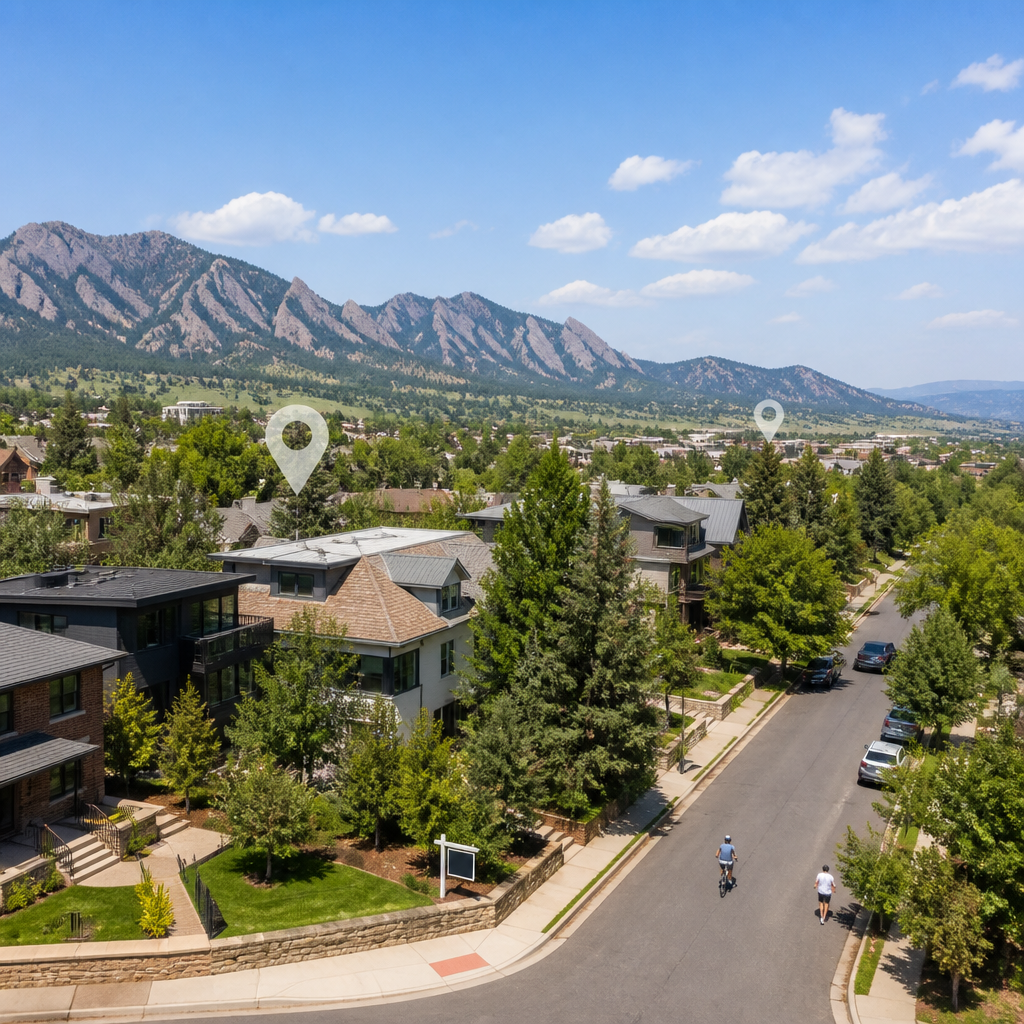

First-Time Homebuyer in Lafayette: Essential Tips for 2026
First-Time Homebuyer in Lafayette: Essential Tips for 2026 First-time homebuyers in Lafayette face a market shaped by limited inventory, shifting mortgage rates, and strong lifestyle appeal. According to Redfin, Lafayette's median home sale price sat in the mid-$600,000 range as of mid-2025, reflect
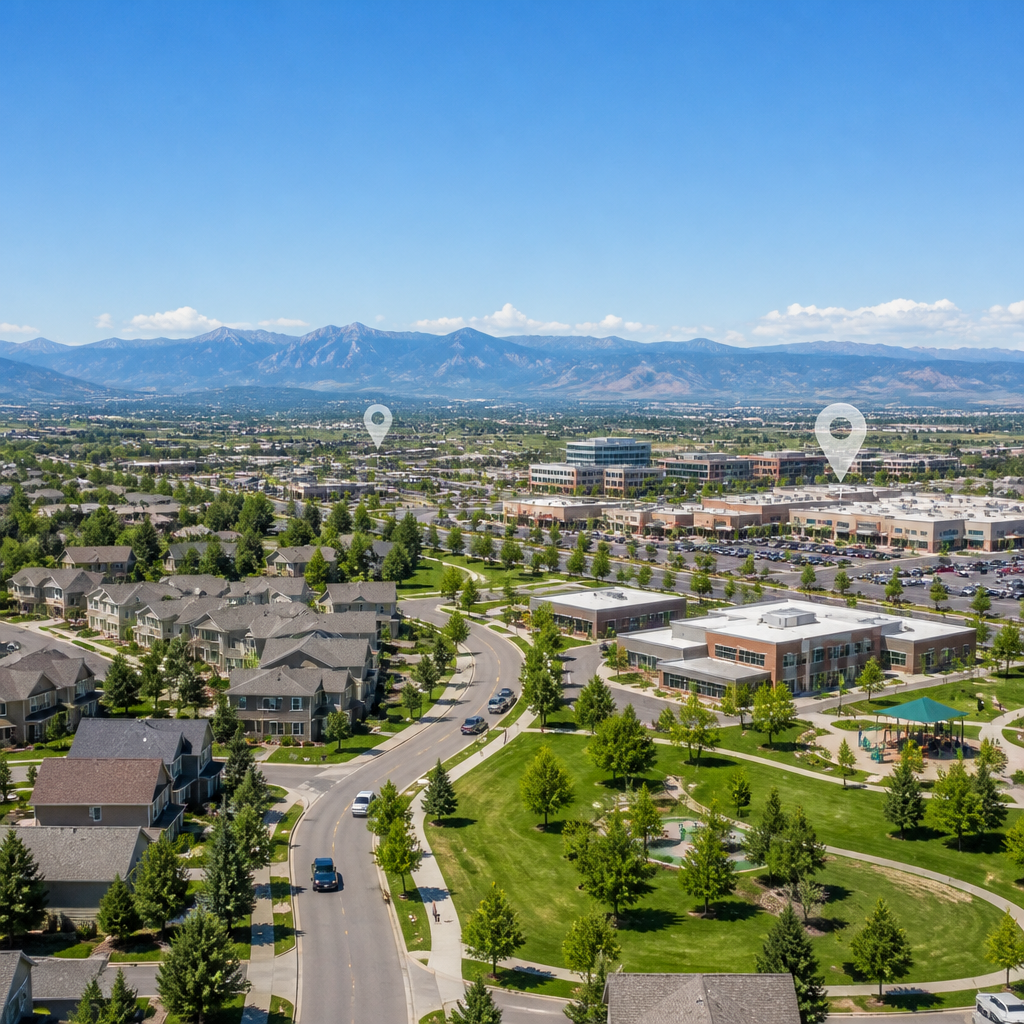
Moving to Broomfield, CO: What New Residents Should Know in 2026
Moving to Broomfield, CO: What New Residents Should Know in 2026 Broomfield continues to attract new residents for its location between Denver and Boulder, growing to roughly 76,000 residents as of 2023. According to U.S. Census QuickFacts, the city’s population has increased by about 20% since 2010